Why Balance Training Becomes More Important as You Age
Balance is not one thing
Balance depends on the interaction between vision, the inner ear, sensation from the feet and joints, reaction speed, attention, muscle strength and the nervous system's ability to coordinate movement. Because several systems contribute, balance can decline even in someone who still considers themselves active.
Why strength alone is not enough
Resistance training improves the force available to recover from a loss of balance. Stronger hips, legs and trunk can help you step, brace and regain control. But balance is also task specific. If you never practise narrowing your base of support, standing on one leg, moving in different directions or reacting to instability, strength alone may not fully prepare you for those situations.
What does the evidence show?
Large systematic reviews have found that exercise reduces falls in community-dwelling older adults. Programs that challenge balance and include functional exercise are particularly effective. Multicomponent programs that combine balance and functional training with resistance exercise also reduce falls.
This is why both Australian and World Health Organization guidelines recommend that older adults include activities that emphasise balance, coordination and strength.
What does effective balance training look like?
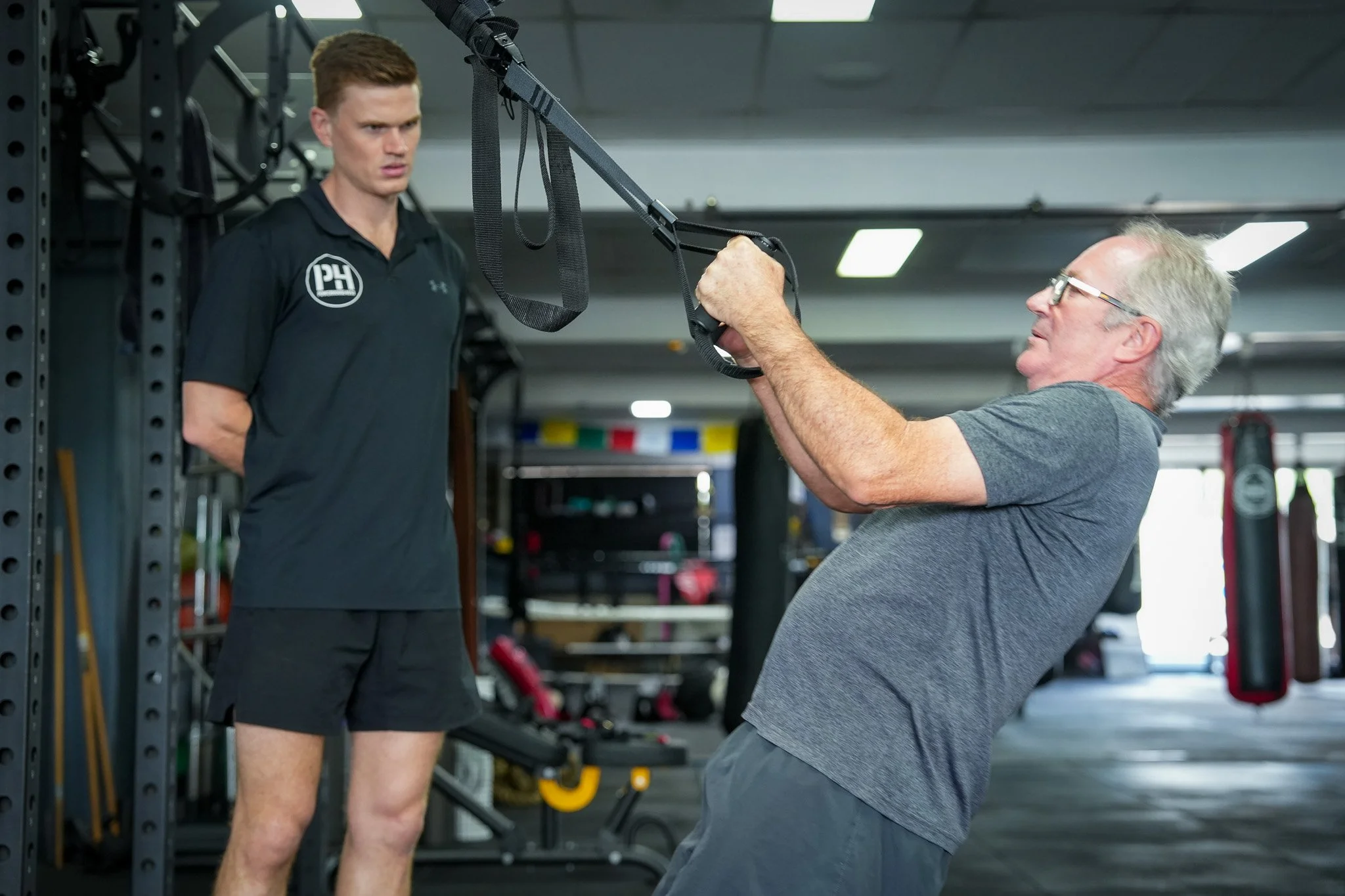
Balance work should be challenging enough to require concentration while still being safe. Examples include tandem stance, single-leg variations, controlled stepping, changing direction, reaching, stepping over obstacles and performing tasks with less hand support.
Progression can involve reducing support, narrowing the stance, adding movement, changing surfaces, turning the head or adding a second task. Closing the eyes or using unstable surfaces can substantially increase difficulty and should only be used when appropriate.
Train for confidence, not fear
Falls-prevention messaging can sometimes make people feel old or fragile. A better goal is to build physical confidence. Balance training helps people feel more capable on stairs, trails, uneven ground, boats, ladders and busy environments. It is not only about avoiding a fall; it is about preserving freedom.
The takeaway
Strength gives you the horsepower to respond. Balance training teaches you how and when to use it. The strongest approach combines both.
Ready to build strength for the life you love?
Book a discovery call with Limitless Personal Performance to discuss your goals, training history and the coaching option that best fits your life.
More articles you may like